Circular Economy for GCC Countries: From Waste to Value Creation!
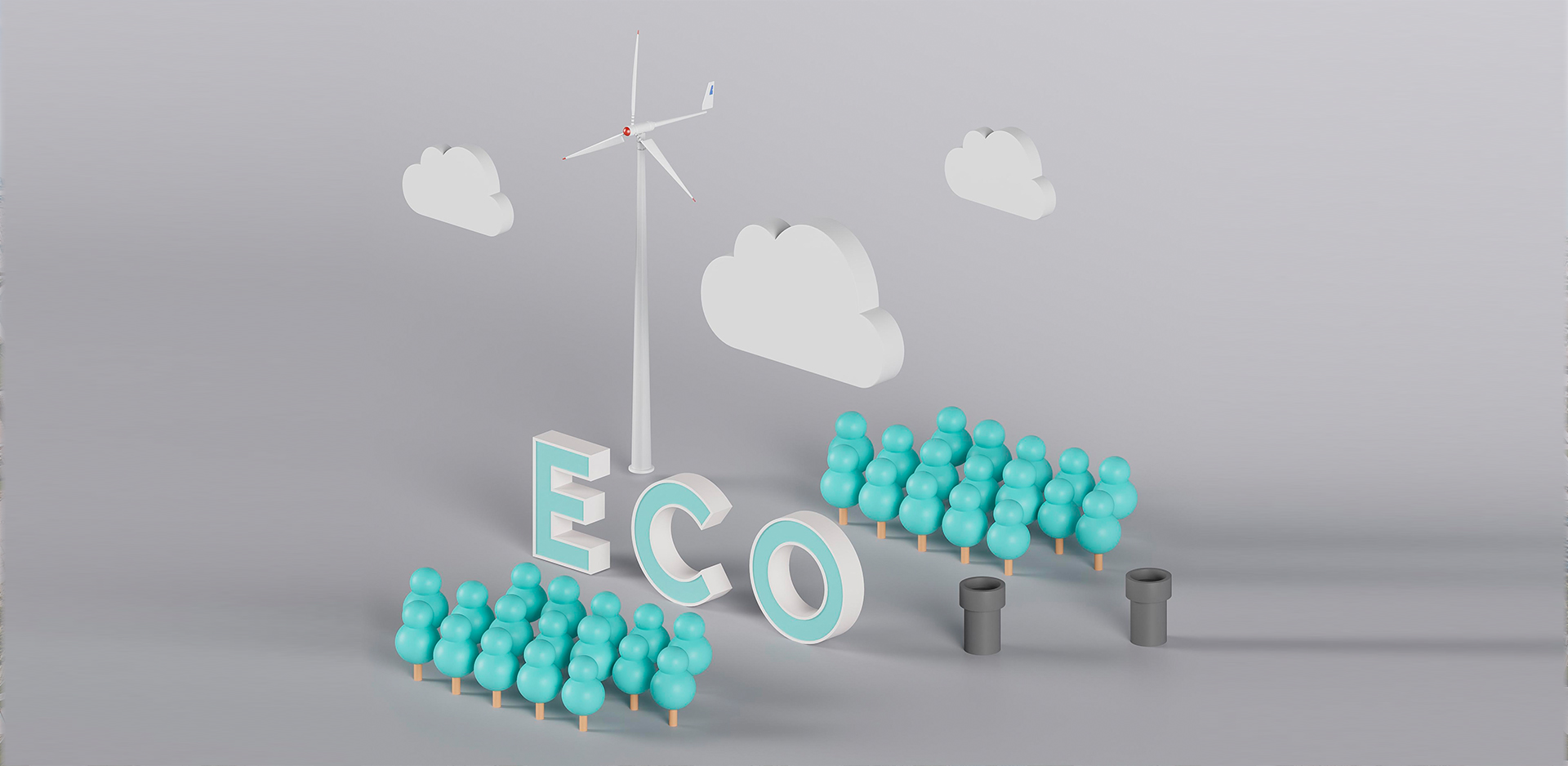
Have you ever wondered why our waste—plastic, construction debris, electronics—so often ends up in landfills instead of being transformed into something valuable? In the Gulf, we live amid abundance, yet our consumption often leaves behind wasted opportunity. Circular economy principles invite us to flip the script: transforming waste into value, closing loops, and safeguarding prosperity for the future.
In 2022, the International Labor Organization estimated that the transition to a circular economy could create six million jobs worldwide. This shift represents not only a significant employment opportunity but also an opportunity to build a world characterized by justice and social inclusion.
In the Gulf’s shifting sands, a new economy is rising—not one founded on oil and gas, but on cycles and regeneration. Gulf Cooperation Council (GCC) countries are transforming the way they view waste—from problem to opportunity—emerging as leaders in circular economy innovation. This transformation is not only sustainable; it’s strategic.
Turning Waste into Wealth: A Shift in Paradigm
In 2024, GCC nations outperformed the global average on the Carbon Circular Economy Index with a score of 41.5, demonstrating real progress toward net-zero emissions through mitigation technologies and circularity (Oman News Agency, 2025). This achievement underscores the region’s growing commitment to sustainable energy, carbon reduction, and economic diversification.
More than rhetoric, this shift is material. GCC economies are diversifying away from hydrocarbons, embedding circular principles—reduce, reuse, recycle—into both national strategy and corporate practice.

Real-World Circular Success Stories:
- Qatar: Qatar's focus has been on recycling construction waste, particularly "World Cup waste," which has posed a significant challenge. Significant efforts have been made with contractors and others to highlight the importance of recycling and its economic value to the country. The Supreme Committee for Delivery & Legacy estimates that approximately 2,000 tons of waste removed from the 2022 FIFA World Cup Qatar stadiums has been recycled, 80% of which has been recycled.
Both the public and private sectors in Qatar have witnessed a gradual shift towards a low-carbon, resource-efficient economy. One of the most notable developments in this regard was the establishment of the Ministry of Environment and Climate Change, pursuant to Emiri Decree No. (57) of 2021, dedicated to achieving climate goals. Other initiatives include plans for national public transport providers to transition to fully electric vehicles by 2030, and sustainable financing services provided by Qatar National Bank. These efforts align with Qatar's long-term strategic goals for social, economic, and environmental sustainability. Qatar's Third National Sustainable Development Strategy supports this path, highlighting environmental sustainability as a key objective. Qatar is committed to accelerating the transition to a circular economy by adopting recycling principles in industrial processes and cities, creating a circular economy market for recycled and reused materials, and reducing waste generation through social behavioral change.
- Saudi Arabia: During its G20 Presidency, the Kingdom launched the Circular Carbon Economy concept, which was endorsed by the G20 as an integrated and comprehensive framework to address the challenges posed by greenhouse gas emissions and manage them using various available technologies. This approach represents an economically sustainable way to manage emissions using four strategies: reduce, reuse, recycle, and remove. These four strategies are aligned with Saudi Vision 2030 through its programs aimed at achieving social transformation and more sustainable economic growth, in alignment with and working with all development sectors in the Kingdom, such as energy, industry, water, agriculture, tourism, and others.
The Saudi Ministry of Industry and Mineral Resources has adopted the Circular Economy Acceleration Initiative, which aims to provide advisory services to participating factories and enable them to implement the circular economy concept to maximize the use of natural resources in manufacturing and increase the efficiency of manufacturing processes by adopting modern technologies that contribute to waste reduction and recycling.
- UAE: Through Tadweer Group, an Abu Dhabi-based waste management and recycling services company, it has inaugurated an advanced waste-to-energy plant with an annual processing capacity of 900,000 tons and established a facility to recover recyclable materials from municipal waste (Wikipedia, 2024).
- Oman: With an agricultural backbone, Oman has pioneered composting across the GCC, turning food waste into compost that supports the farming sector—reducing landfill usage and creating a circular input for production. Oman aims to have 80% of municipal solid waste reused or recycled by 2030, and that by 2040 the amount of waste produced per person per day will be less than 1 kilogram.
- Bahrain: The kingdom is leveraging its dominant aluminum industry by securing scrap metal supply through new recycling regulations, turning waste into feedstock for regional manufacturing. The volume of recycled materials in Bahrain reached approximately 700,000 tons in 2021.
- Kuwait: With potential to recycle over 76% of its solid waste, Kuwait is building out multiple recycling facilities and infrastructure to phase out landfills by 2035, in line with GCC-wide waste reform.
These cases illustrate a broader conviction that the circular economy is less about limiting consumption and more about creating value through innovation, resource efficiency, and industrial foresight.
Innovating the Business Model: Sustainability as Transformation
GCC leaders are adopting sustainability not as a compliance checkbox but as a core business transformation. As Visnjic, Monteiro, and Tushman argue, firms committed to sustainability must overhaul their business models—not unlike digital or AI-driven transformation.
Examples from global leaders—like renewable energy giants or circular manufacturing—are being emulated in the Gulf through infrastructure investments, green funds, and cross-sector partnerships. This shift locks sustainability into corporate DNA.
Governance, AI, and Risk in Circular Strategies
To realize circular economy ambitions, GCC stakeholders are improving governance and adopting digital tools. As governance thought-leaders highlight, tackling net-zero and resource efficiency demands teamwork, transparency, and integrated oversight.
Emerging technologies—like IoT, AI, and data analytics—are used to track material flows, optimize waste sorting, and predict resource needs. Yet with innovation comes risk: governance frameworks must now include risk oversight of these technologies—drawing also on AI governance best practices such as transparency, accountability, and resilience (McKinsey, 2023).
Toward Shared Value and Embedded Sustainability
GCC actors are moving toward embedded sustainability and shared value models (Eccles, 2024; Porter & Kramer, 2011). These models merge profit with social purpose—complementing circular initiatives that reduce carbon and empower communities. This strategic alignment strengthens resilience and drives long-term value creation.
Enablers of GCC Circular Transformation
To scale circularity, GCC players are:
- Embedding circular levers across operations: designing for reuse, building reverse logistics, and promoting waste valorization.
- Implementing rigorous KPIs: tracking material efficiency, carbon reduction, and revenue from recycled inputs.
- Leveraging technology: using AI-enabled sorting, IoT-enabled tracking, and digital twin modeling.
- Cultivating public-private collaboration: pooling resources, building infrastructure, and standardizing regulations.
This mirrors global best practices, where circular strategies are embedded, tested through pilots, scaled upon success, and reinforced via supportive policies (Deloitte & EDF, 2024).
Future Outlook: From Regional Labs to Global Leadership
Emerging trajectories suggest the GCC is poised to become a circular economy laboratory for arid, resource-constrained regions. With integrated energy systems, robust governance, and innovation ecosystems, Gulf states can deliver scalable circular models—from agri-waste composting to e-waste valorization and sustainable packaging.
Success will hinge on aligning regulatory incentives, mobilizing private capital, advancing data-driven governance, and nurturing a culture of innovation that values sustainability as a core asset.
Conclusion—Designing Prosperity through Cycles
The transformation of GCC economies—from linear extraction to circular renewal—is more than an environmental pivot. It’s a reinvention of purpose, governance, and resilience. By turning waste into resource, embedding sustainability in strategy, and governing with foresight, Gulf nations are crafting a sustainable prosperity narrative.
At Badeal Business Solutions, we champion this vision. As a boutique consultancy rooted in sustainability, innovation, and business excellence, we empower institutions to:
- Govern with Intent: Integrate circular KPIs, risk-aware AI tools, and collaborative governance models.
- Innovate with Impact: Deploy strategic circular pilots across sectors like waste-to-energy, composting, and recycling.
- Excel with Excellence: Build resilient business models that blend sustainability with competitive advantage.
By aligning global thinking with local insight, Badeal helps clients in GCC and especially in Qatar to turn circularity into growth—from waste to value, from promise to prosperity.
References:
Deloitte & Environmental Defense Fund. (2024). Pathways to net zero: Circular strategies for climate action.
Eccles, R. G. (2024, September–October). Moving beyond ESG. Harvard Business Review.
Porter, M. E., & Kramer, M. R. (2011). Creating shared value. Harvard Business Review.
Visnjic, I., Monteiro, F., & Tushman, M. L. (2025, May–June). Sustainability as a business-model transformation. Harvard Business Review.
Wikipedia. (2024). Tadweer Group.
Oman News Agency. (2025). Gulf Cooperation Council countries outperformed global average in Carbon Circular Economy Index. Oman News Agency.
Deloitte & EDF. (2024, March). To shift to a circular economy, act, advocate, advance. WSJ Sustainable Business.
McKinsey (2025). A conceptual model and methodology for sustainability-aware, IoT-enhanced business processes.